DARK ASCENSION

Role: Solo LEVEL DESIGNER


Tool: UEFN


Theme: Action Adventure


Timeline: 3 weeks


Completion Date: MAR, 2026

Role: Solo LEVEL DESIGNER


Tool: UEFN


Theme: Action Adventure


Timeline: 3 weeks


Completion Date: MAR, 2026

Role: Solo LEVEL DESIGNER


Tool: UEFN


Theme: Action Adventure


Timeline: 3 weeks


Completion Date: MAR, 2026

Overview

Overview

Overview

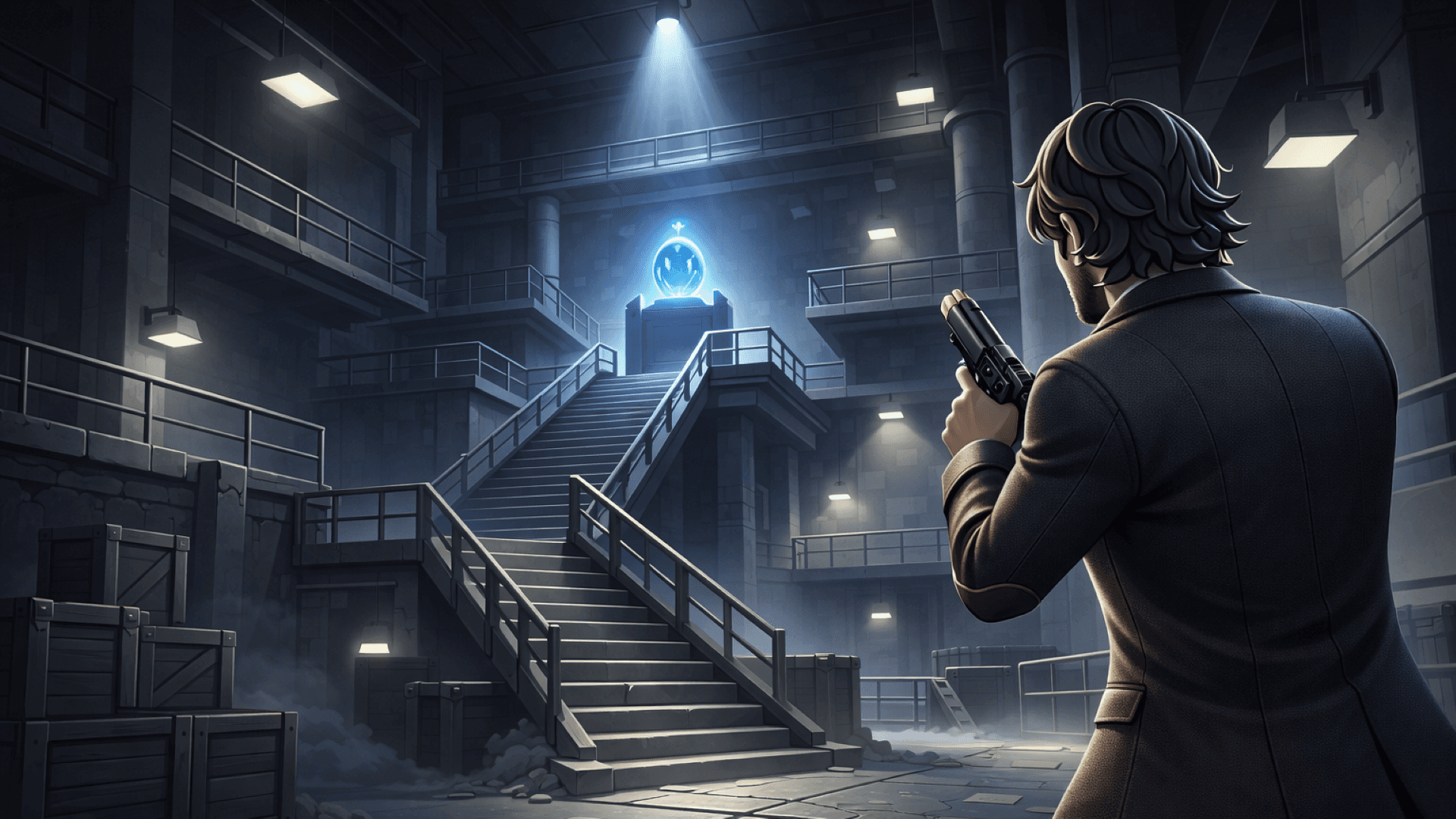
Dark Ascension is a singleplayer shooter set inside a grim, industrial warehouse at night. Taking inspiration from Bloodborne and the Uncharted series, the level challenges the player to ascend through increasingly hostile floors to retrieve the Sapphire Egg — an ancient artifact guarded at the top of the building. The warehouse is vertically structured across multiple floors, each guarded by enemies armed with different weapon types. The player fights upward through tight corridors, open staging areas, and elevated catwalks, making moment-to-moment decisions about when to fight, when to flank, and when to push forward.


The level uses a Soulslike persistence system: death resets all enemies and ammo pickups, but any shortcut doors the player has already unlocked remain open. This means each run is faster and less punishing than the last — the player is never sent back to zero, only back to their most recent foothold. Killing enemies rewards the player with partial health recovery and a few rounds of their weapon type, making aggressive play the most efficient strategy for resource management.

design pillars

design pillars

design pillars

Confidence through repetition

Confidence through repetition

Confidence through repetition

Each run should feel meaningfully faster than the last. The player gets better, not just luckier.

Each run should feel meaningfully faster than the last. The player gets better, not just luckier.

Death as information

Death as information

Death as information

Failure teaches a lesson — a better route, a smarter approach, a mechanic the player hadn't tried yet.

Failure teaches a lesson — a better route, a smarter approach, a mechanic the player hadn't tried yet.

Aggression is the strategy

Aggression is the strategy

Aggression is the strategy

Enemies have accurate aim. Passive play bleeds HP. Killing fast is the most efficient way to survive.

Enemies have accurate aim. Passive play bleeds HP. Killing fast is the most efficient way to survive.

LEVEL LAYOUT

Dark Ascension is structured across four active floors of an industrial warehouse, with a underground basement serving as the final boss arena. Progression is broadly linear and vertical — the player climbs floor by floor — but the level is threaded with shortcuts that collapse travel time on repeat runs, echoing the Soulslike design philosophy that death should never feel like a full reset.
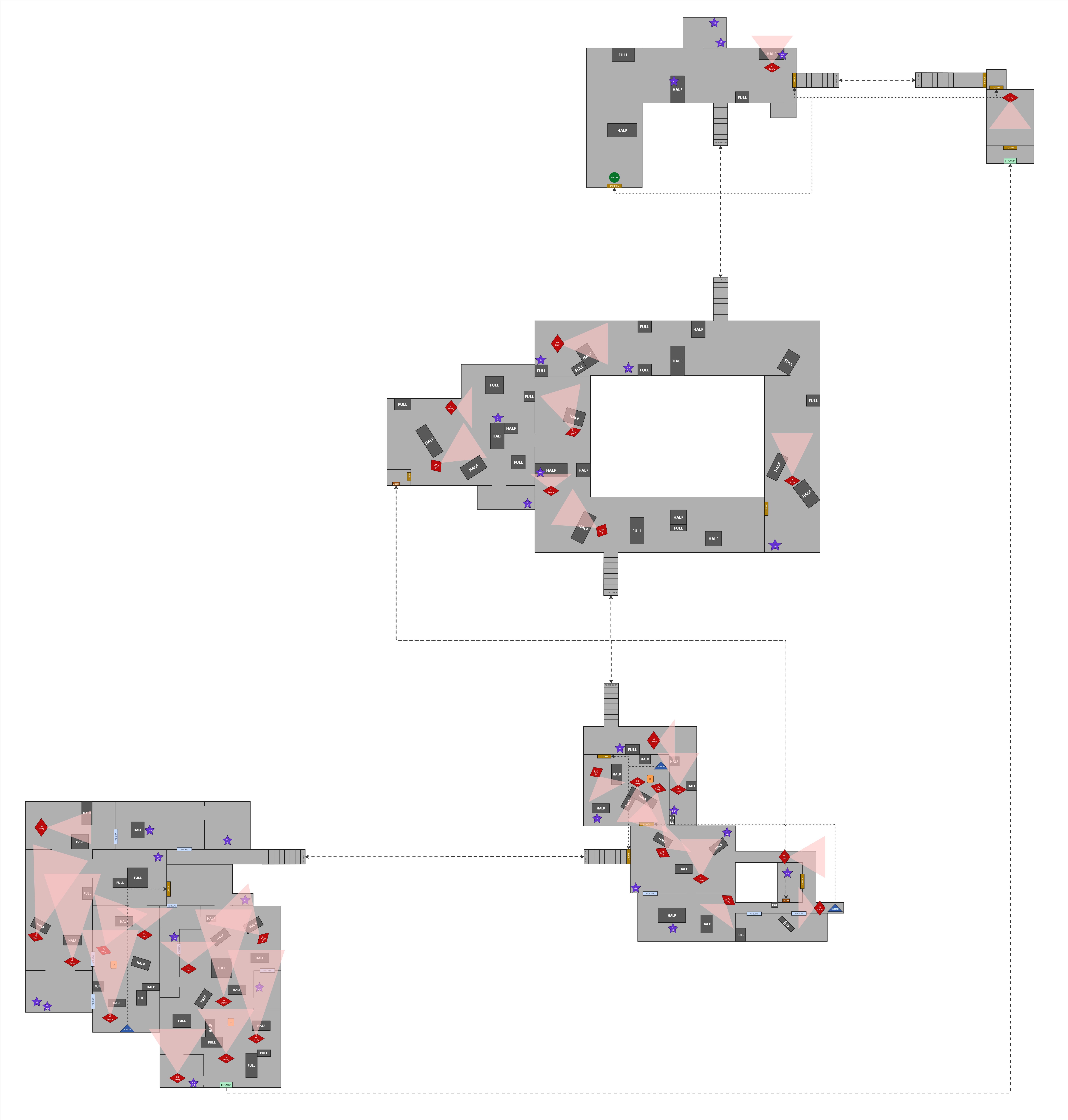
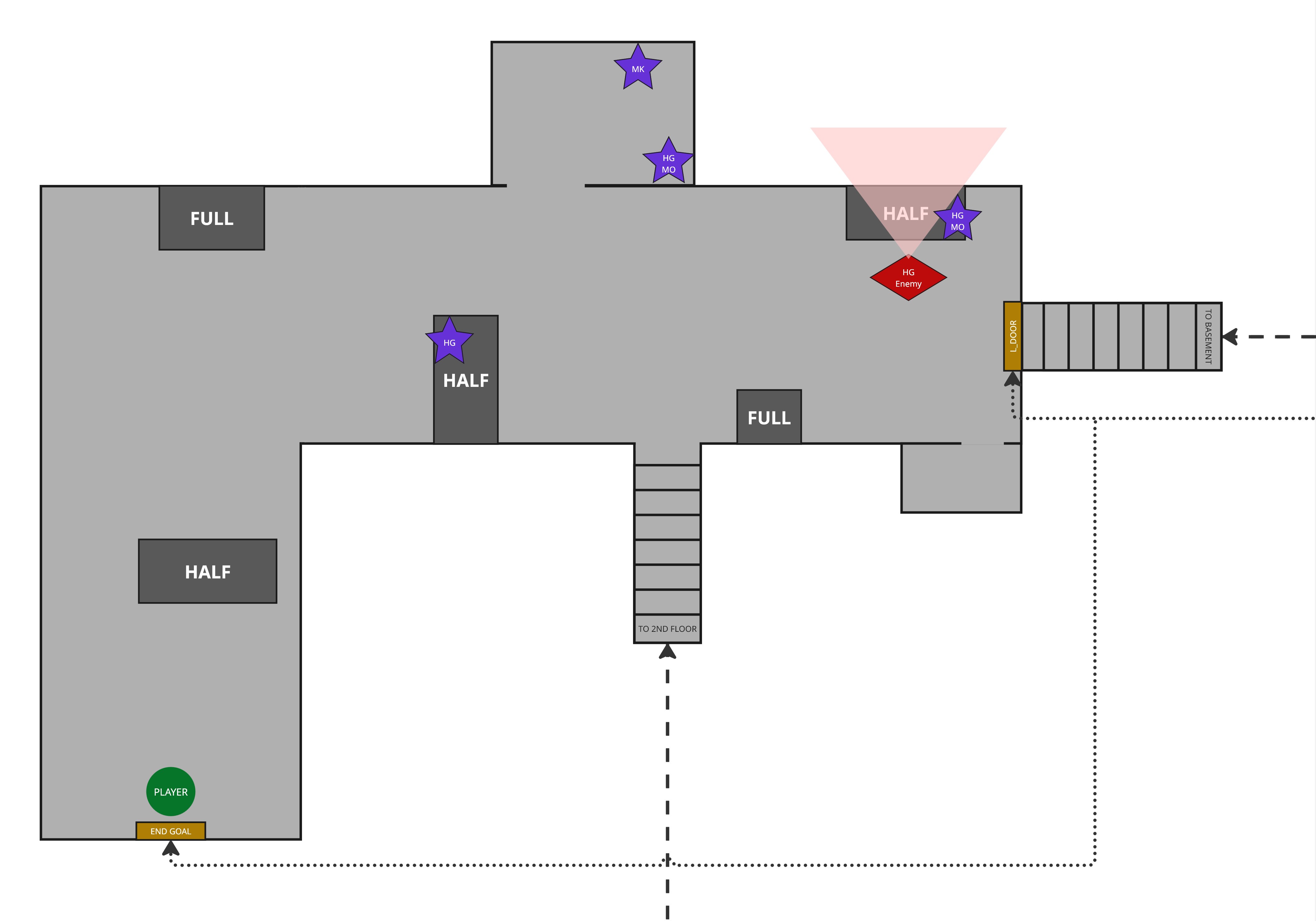
Floor 1 — Tutorial Hall. The player spawns in a ground-floor corridor and picks up their first weapon, the pistol. This floor introduces all basic controls: moving, vaulting, running, and shooting. Enemy density is low. At the end of the hallway is a locked door that only opens after the player completes the full run and kills the final boss — a shortcut that closes the loop on the entire level geographically.
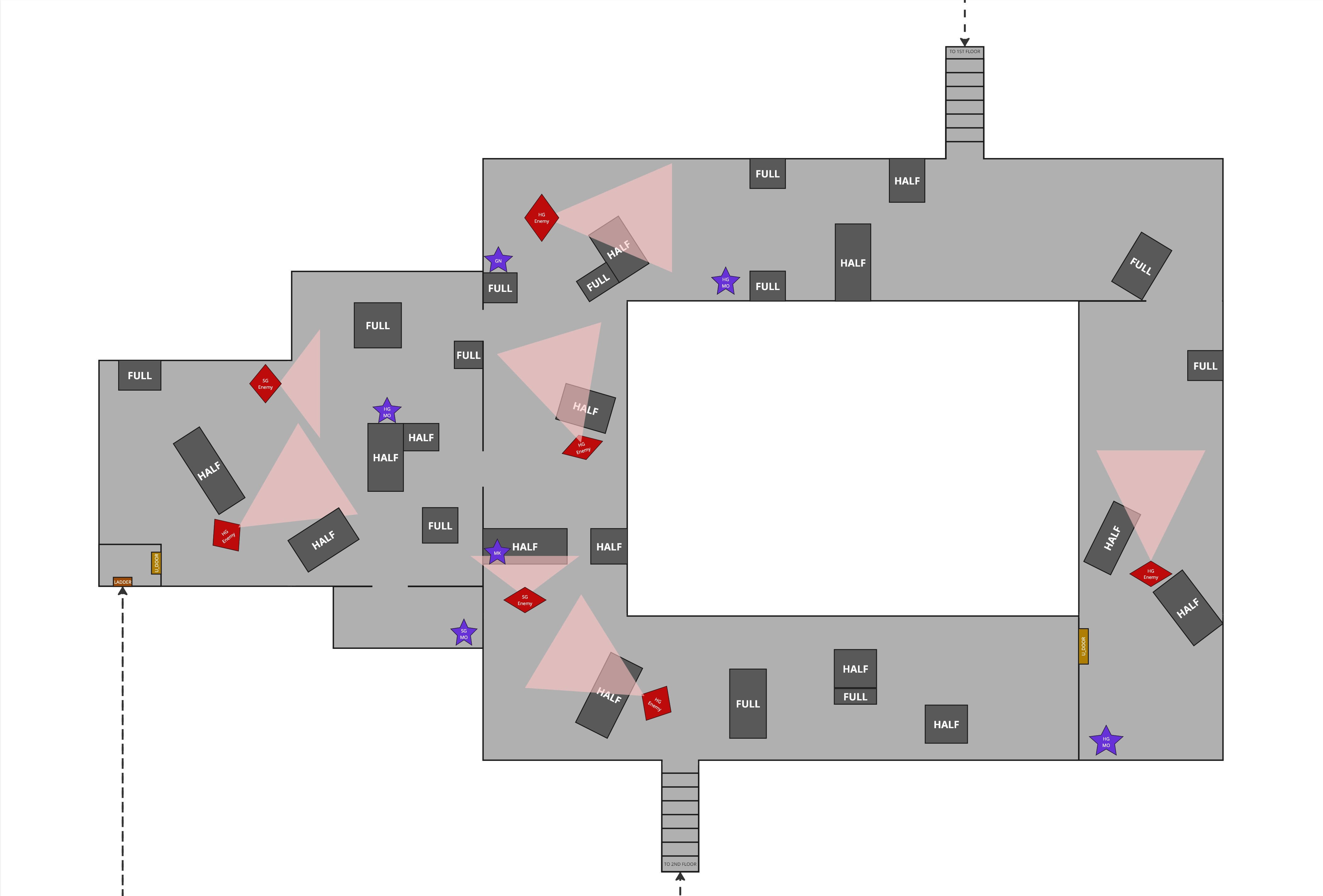
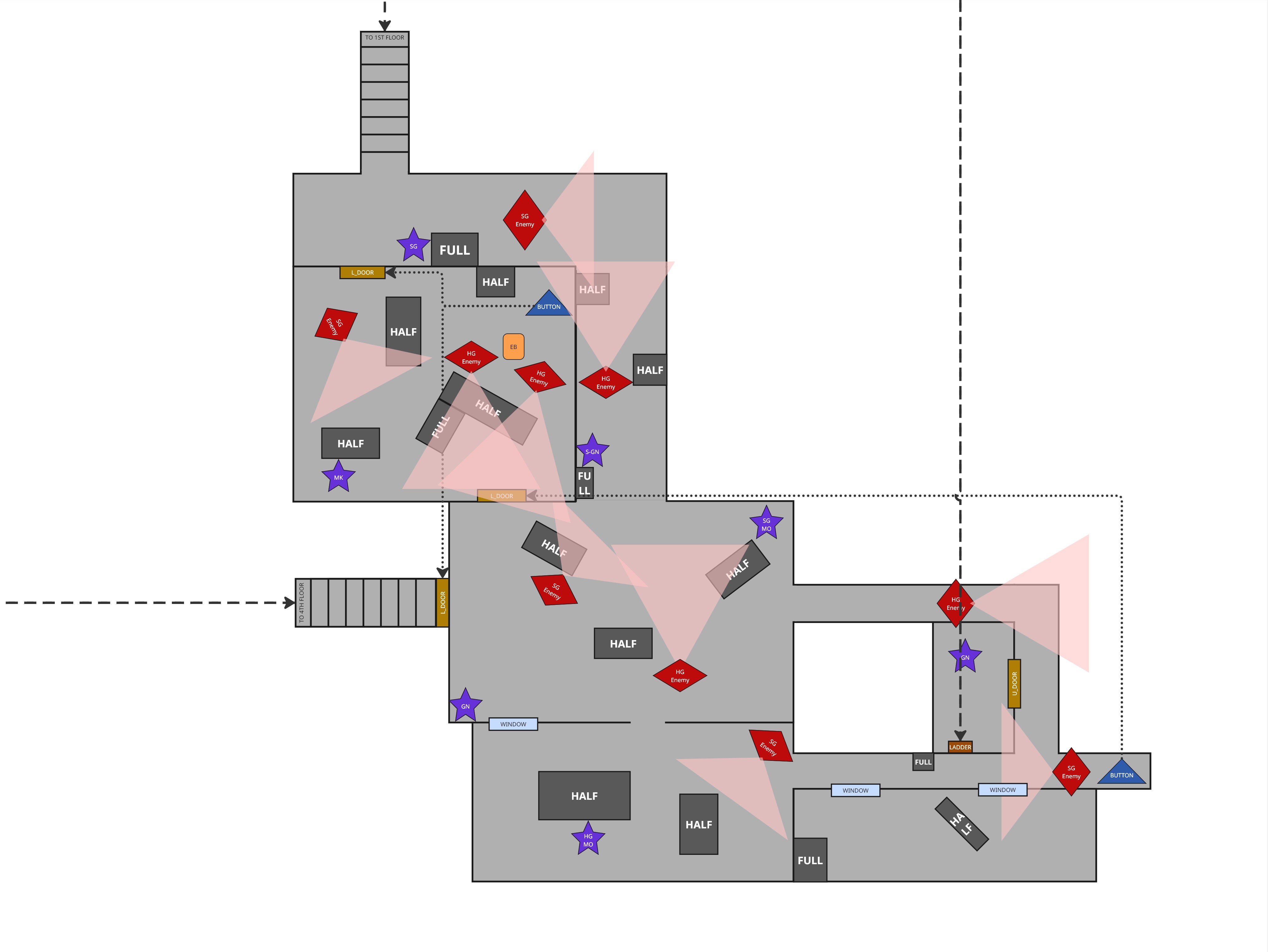
Floor 2 — Circular Structure. The player ascends via stairs into a large circular floor with an outdoor section. Two routes are available from the start: one clearly visible, one hidden behind a large closet. The hidden route has fewer enemies and reaches the floor exit faster, rewarding observant players who explore rather than follow the obvious path. The outdoor area contains a ladder — the main vertical shortcut of the level — that bypasses floor 3 entirely once the player has unlocked it.
Floor 3 — Mechanical Introduction (cut from final game). Originally a dedicated floor introducing shotguns, explosive barrels, and persistent shortcut doors. Removed from the final build due to scope. Its core shortcut — a cross-room path that lets the player skip most of the floor to reach the stairs — was preserved and repurposed in the transition to the shipped version. The ladder shortcut from floor 2's outdoor area now connects directly to the final encounter floor.
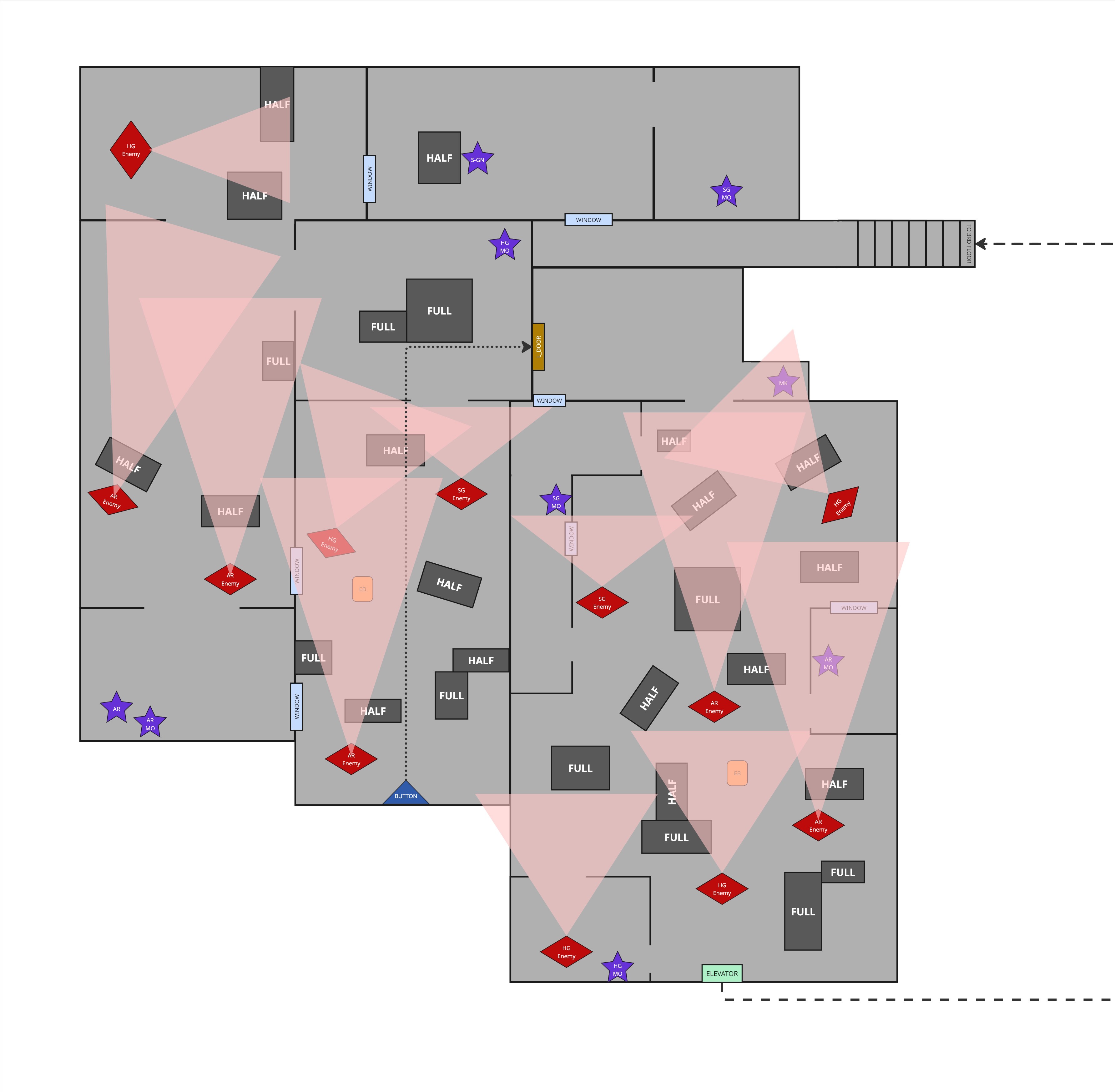
Floor 4 — Mastery Test. The most enemy-dense floor and the site of the final encounter documented in this portfolio. The AR is introduced here, completing the player's arsenal. The floor demands fluency with every mechanic — flanking, explosive barrels, shortcut doors, weapon switching, kill-to-heal — before the player can reach the elevator at the deepest corner of the room.
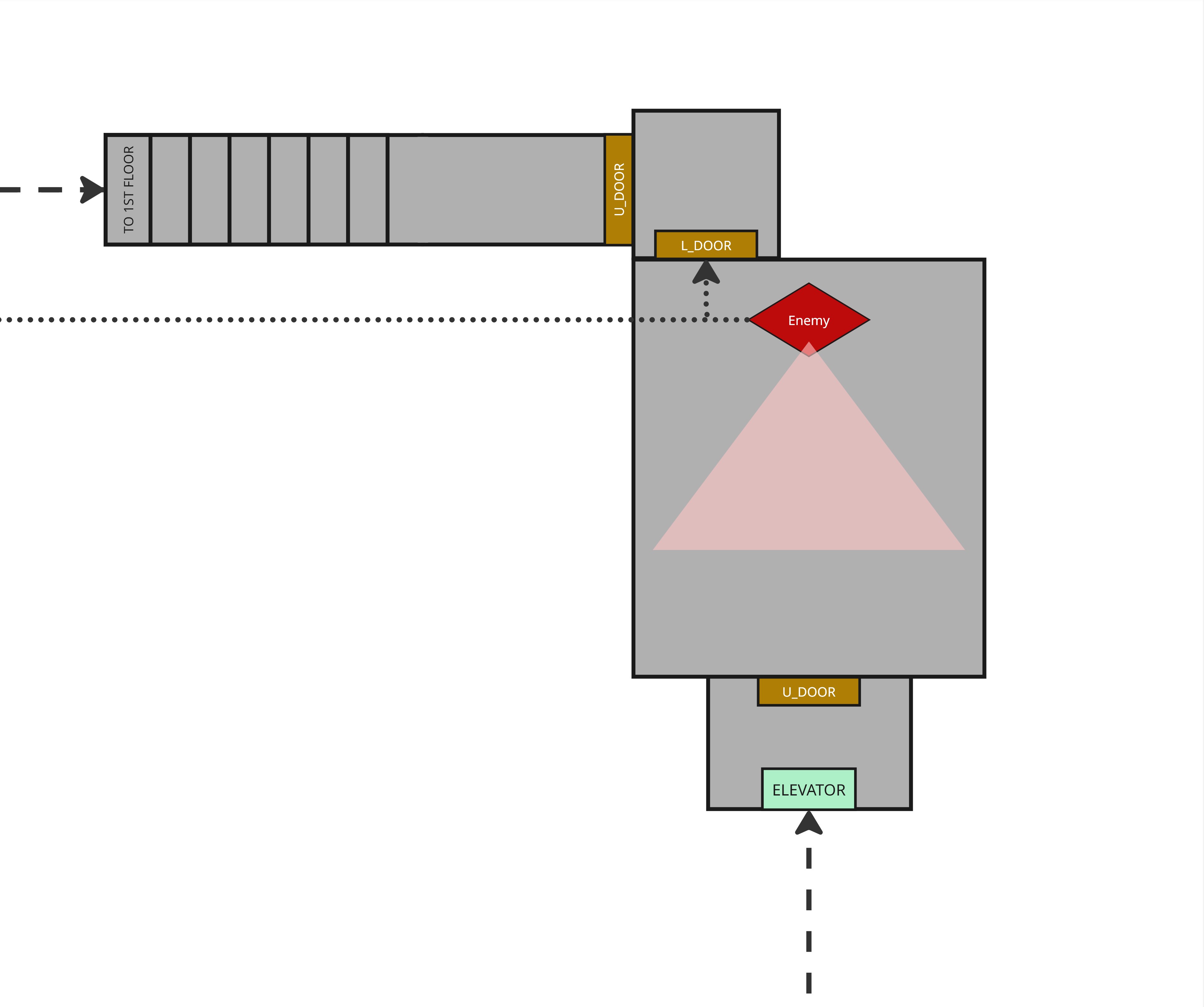
Basement — Final Boss. The elevator descends to an underground arena where the player confronts the mission target: an unarmed figure who is the narrative endpoint of the level, framed like a contract kill in the vein of John Wick. Killing the boss triggers the shortcut door at the end of floor 1's hallway, allowing the player to exit and complete the level.
Deep Dive: The Final Encounter

Deep Dive: The Final Encounter

Deep Dive: The Final Encounter

Concept

Concept

Concept

As a climactic encounter, the final arena needed to accomplish three things simultaneously: synthesize all mechanics the player had encountered earlier in the level, give experienced players multiple strategic options to approach the fight, and create a moment of genuine threat without feeling arbitrary. The encounter had to respect the Soulslike loop — a player who had died here before should feel their prior knowledge paying off, while a first-time player should feel challenged but never confused about what killed them.

The core spatial concept was a wide, open dead zone in the center of the arena, flanked by two alternative routes — one on each side — and a catwalk above. The goal marker (the staircase) is visible from the entrance, giving the player an immediate read on the objective. The right wall also has a shortcut door the player may have unlocked earlier, allowing them to bypass the entrance entirely and emerge in the middle of the arena, flanking the flankers.

As a climactic encounter, the final arena needed to accomplish three things simultaneously: synthesize all mechanics the player had encountered earlier in the level, give experienced players multiple strategic options to approach the fight, and create a moment of genuine threat without feeling arbitrary. The encounter had to respect the Soulslike loop — a player who had died here before should feel their prior knowledge paying off, while a first-time player should feel challenged but never confused about what killed them.

The core spatial concept was a wide, open dead zone in the center of the arena, flanked by two alternative routes — one on each side — and a catwalk above. The goal marker (the staircase) is visible from the entrance, giving the player an immediate read on the objective. The right wall also has a shortcut door the player may have unlocked earlier, allowing them to bypass the entrance entirely and emerge in the middle of the arena, flanking the flankers.

Iterations

Iterations

Iterations

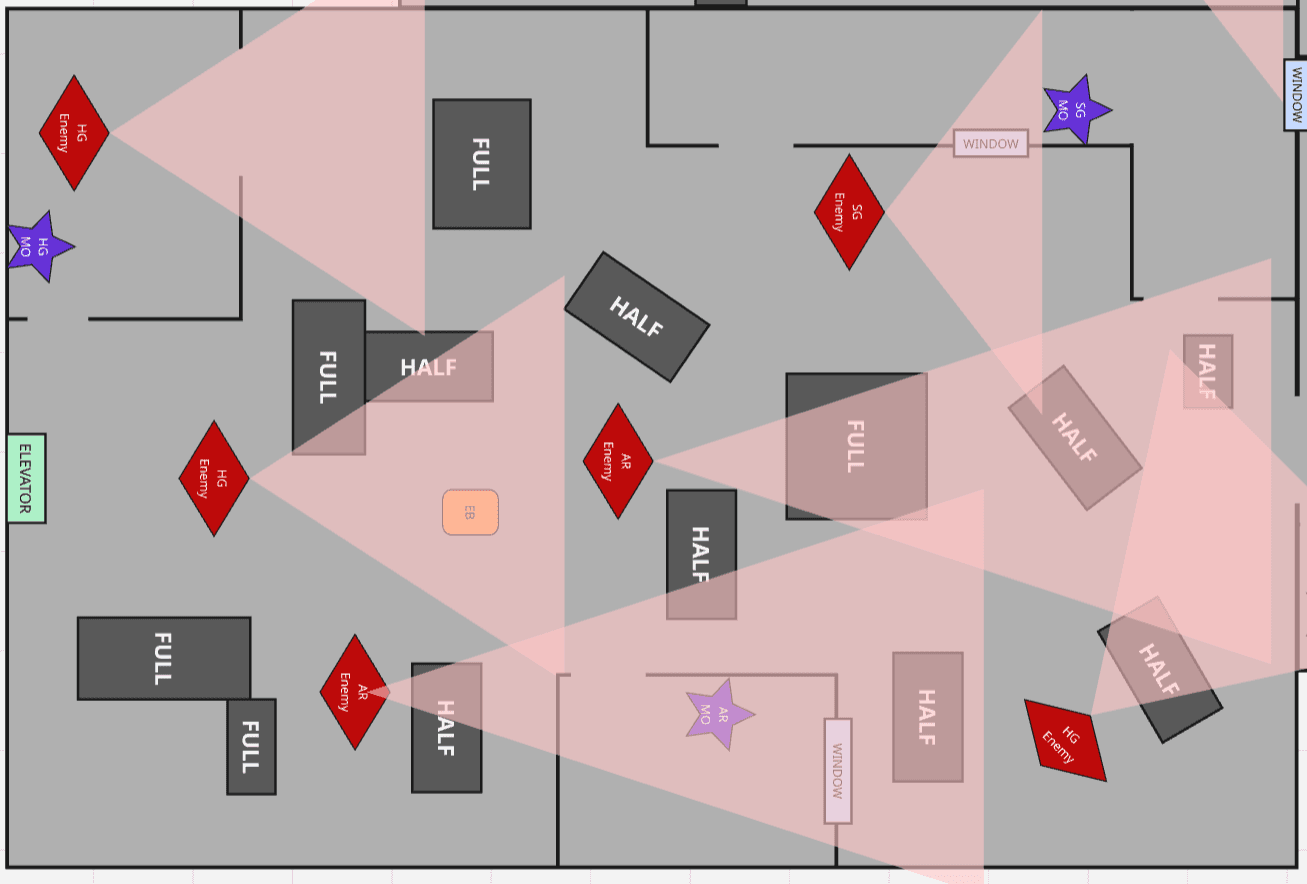
PAPER DESIGN
The initial paper design established the core spatial layout: a central dead zone, two flanking routes, enemy positions, and cover ratings. This stage defined the encounter's structure on paper — where enemies stand, what cover they use, and how the player is expected to move through the space.

PAPER DESIGN
The initial paper design established the core spatial layout: a central dead zone, two flanking routes, enemy positions, and cover ratings. This stage defined the encounter's structure on paper — where enemies stand, what cover they use, and how the player is expected to move through the space.

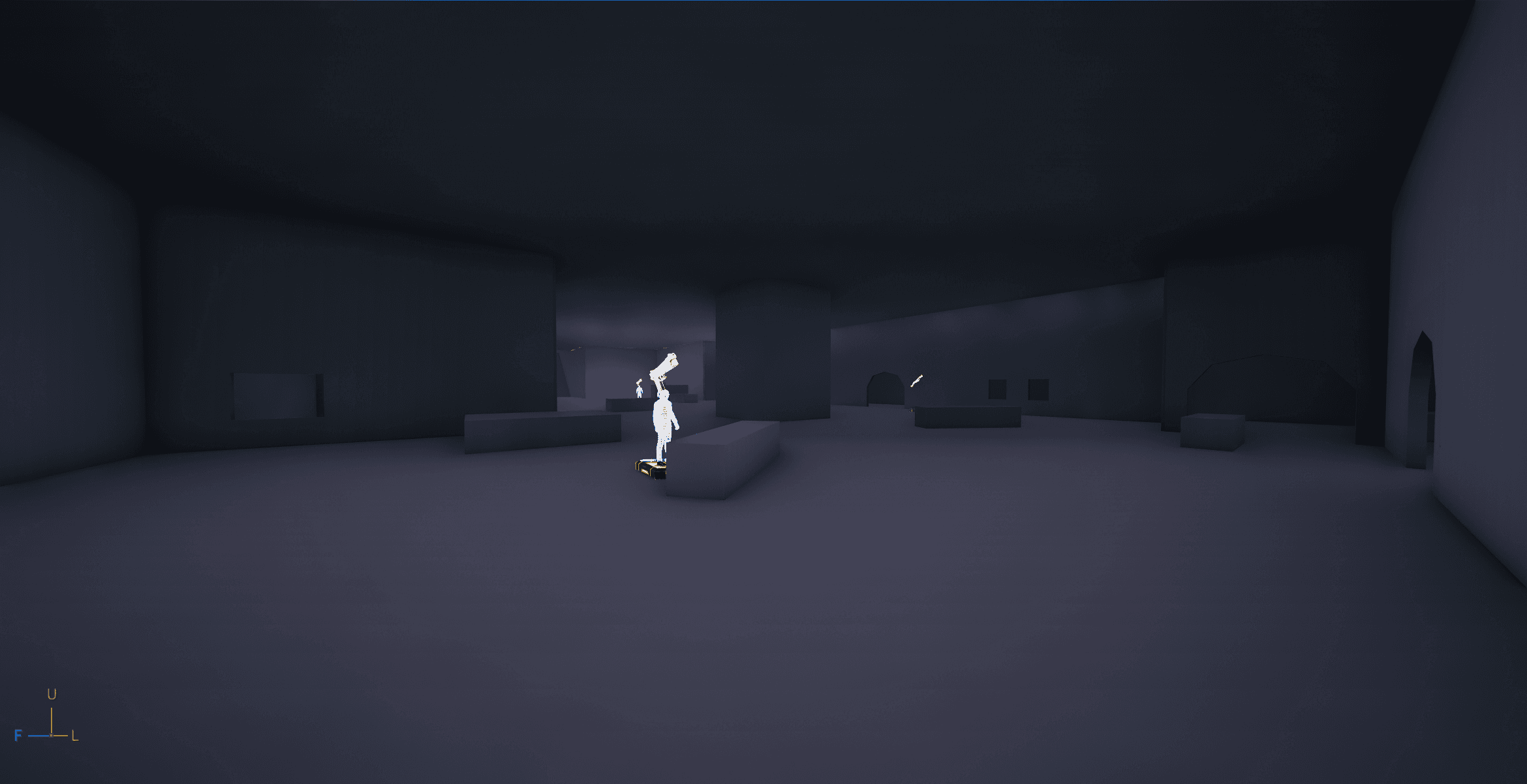
FIRST ITERATION
The paper design was translated verbatim into a greybox. All three weapon types were pickable and functional. The all-white geometry proved the layout's flow was navigable and the encounter was playable end-to-end.

This version included a direct shortcut from the second floor via ledge climbing. The Soulslike death-reset system had not yet been implemented — checkpoints and enemy persistence were still unresolved design questions at this stage.

FIRST ITERATION
The paper design was translated verbatim into a greybox. All three weapon types were pickable and functional. The all-white geometry proved the layout's flow was navigable and the encounter was playable end-to-end.

This version included a direct shortcut from the second floor via ledge climbing. The Soulslike death-reset system had not yet been implemented — checkpoints and enemy persistence were still unresolved design questions at this stage.

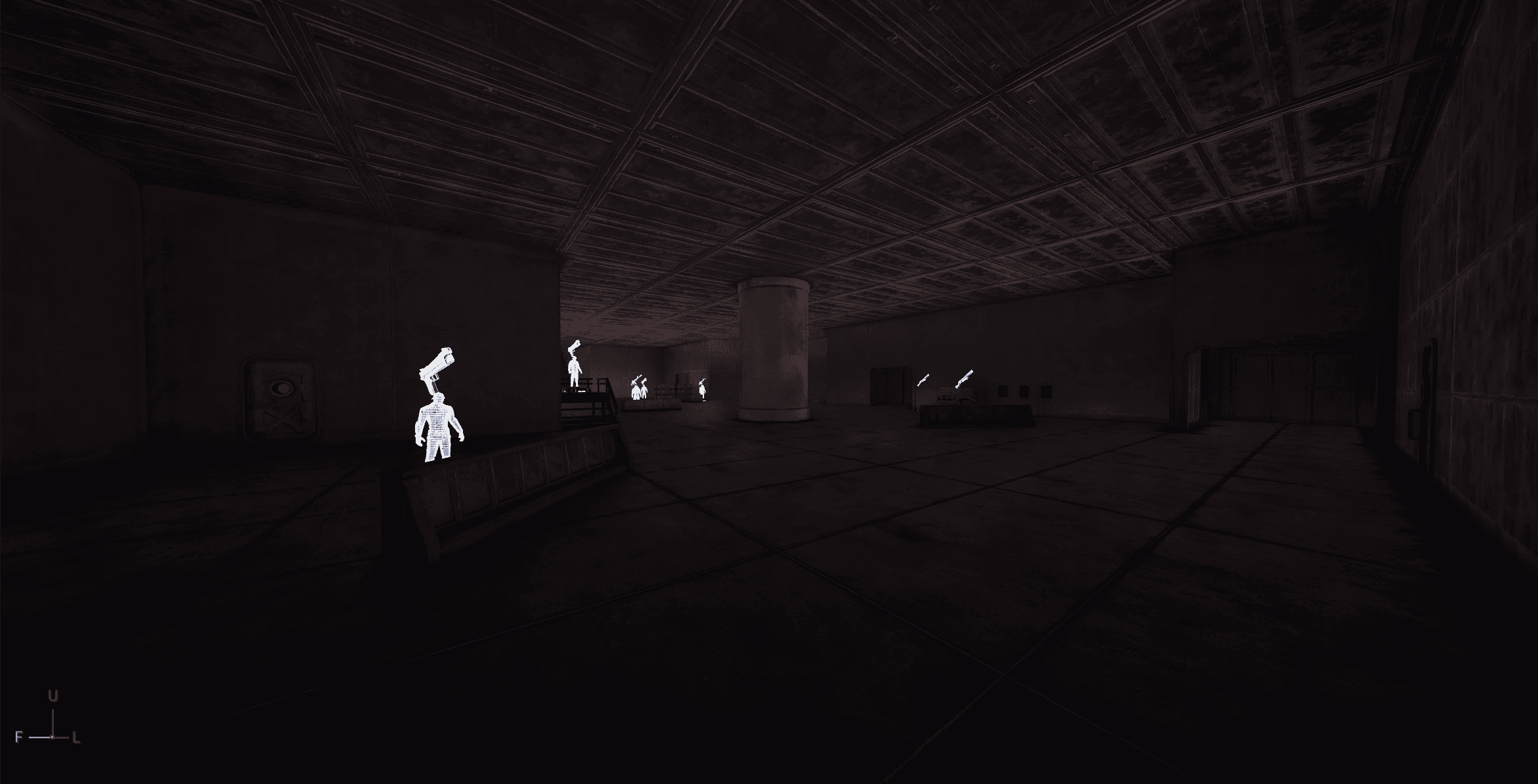
SECOND ITERATION
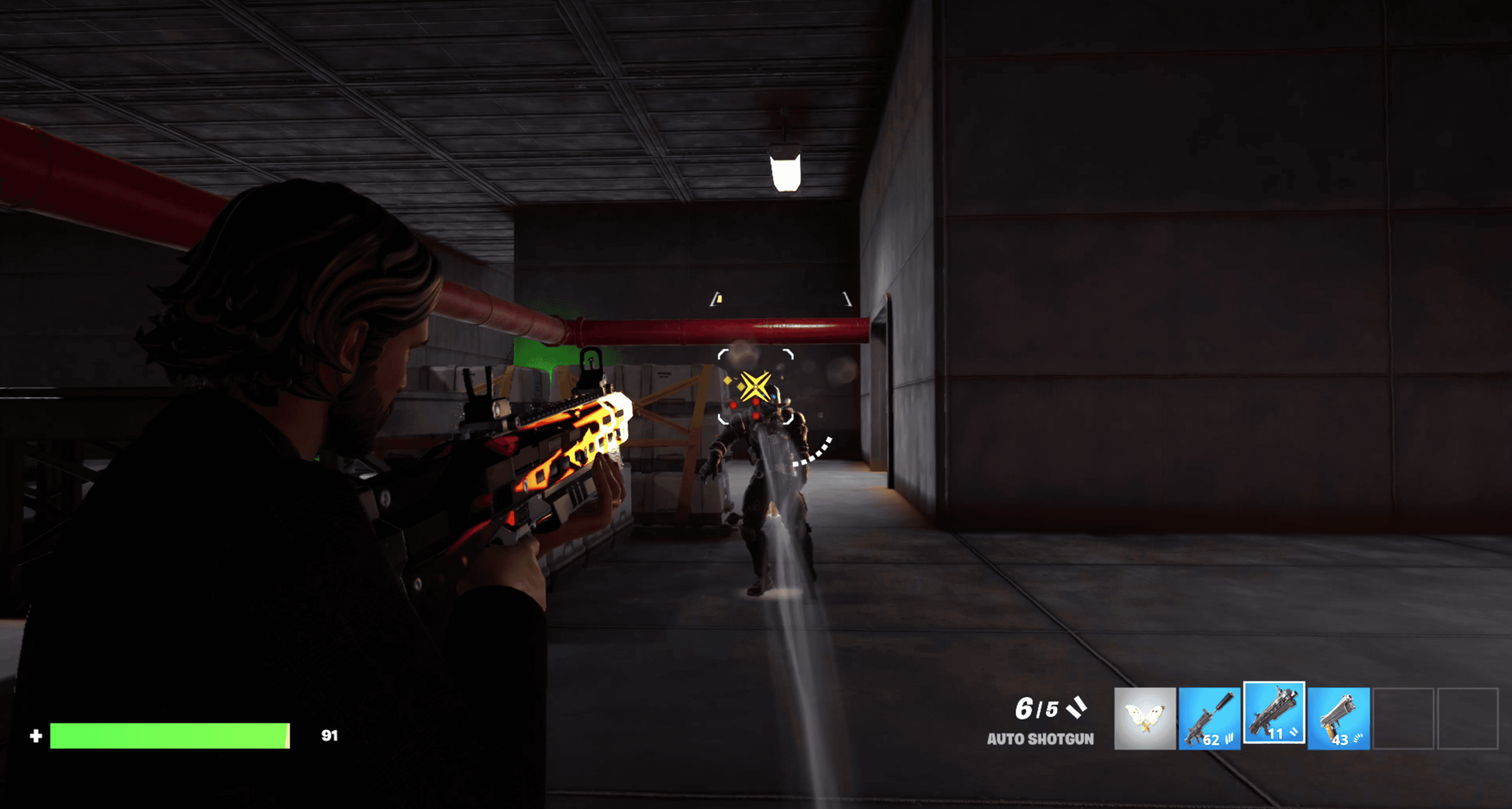
All placeholder geometry was replaced with final assets. Two significant issues emerged immediately. First, the lighting was near-nonexistent — the arena was too dark for players to read the space, and the flank routes were effectively invisible. Second, the health restoration mechanic at the time relied on med kits placed at the flank routes to reward exploration.

Playtesting revealed that applying a med kit took 5–10 seconds and could be interrupted by damage — making them unreliable enough that players avoided them. This finding cascaded: it prompted a rethink of the core health economy, not just the level layout.

SECOND ITERATION
All placeholder geometry was replaced with final assets. Two significant issues emerged immediately. First, the lighting was near-nonexistent — the arena was too dark for players to read the space, and the flank routes were effectively invisible. Second, the health restoration mechanic at the time relied on med kits placed at the flank routes to reward exploration.

Playtesting revealed that applying a med kit took 5–10 seconds and could be interrupted by damage — making them unreliable enough that players avoided them. This finding cascaded: it prompted a rethink of the core health economy, not just the level layout.

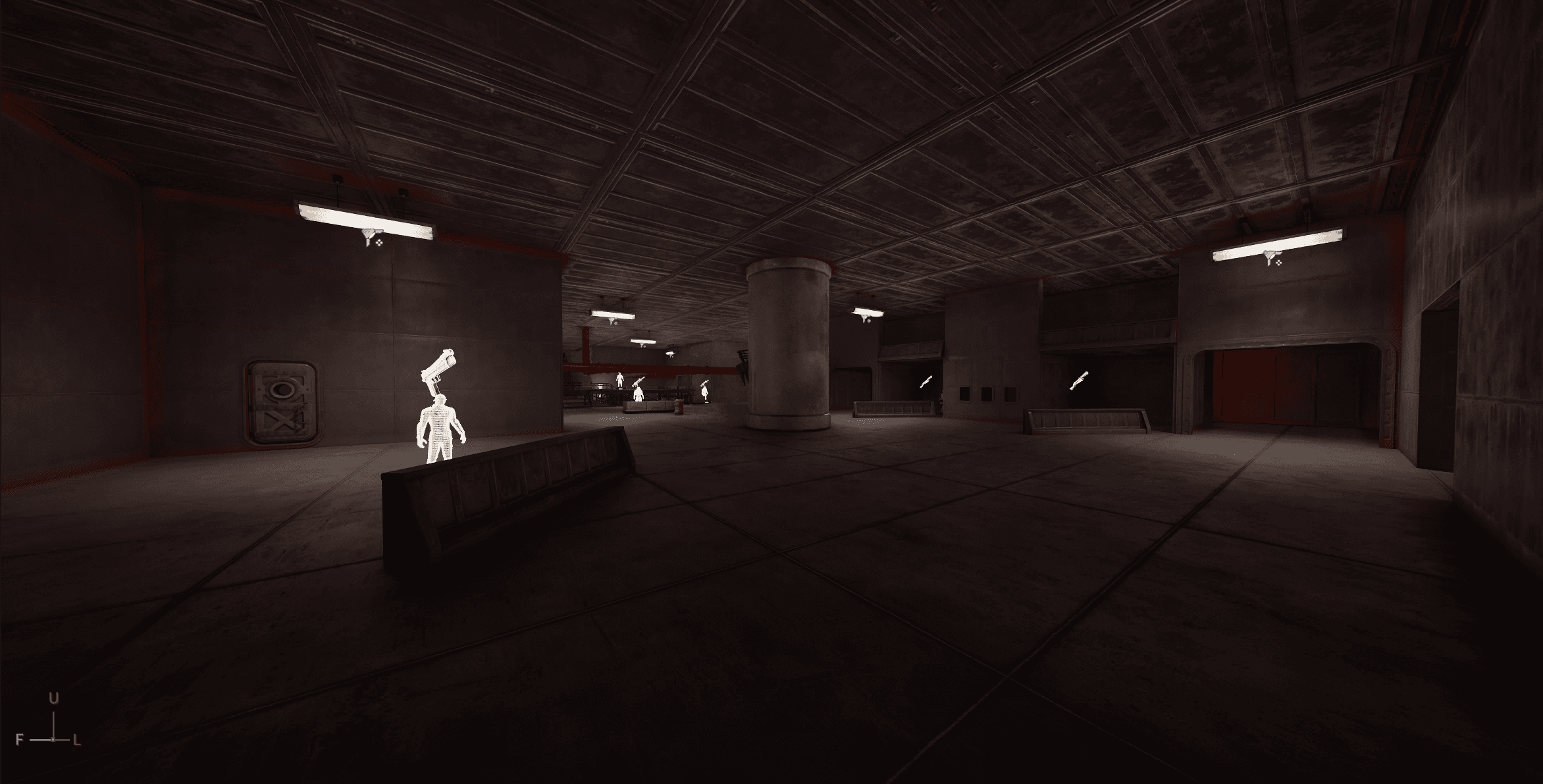
FINAL ITERATION
Lighting was added throughout, making the flank routes legible and the arena readable at a glance. The second-floor ledge shortcut was removed and replaced with proper verticality: catwalks, elevated platforms, and climbable pipes. Enemy composition was rebalanced to include all weapon types rather than relying heavily on riflemen.

The new health economy was integrated — killing enemies restores health and drops their ammo type, which made the flank routes meaningful without needing loot pickups. Players who used flanks to take enemies by surprise stayed healthier and kept their ammo topped off, directly rewarding the intended playstyle.

FINAL ITERATION
Lighting was added throughout, making the flank routes legible and the arena readable at a glance. The second-floor ledge shortcut was removed and replaced with proper verticality: catwalks, elevated platforms, and climbable pipes. Enemy composition was rebalanced to include all weapon types rather than relying heavily on riflemen.

The new health economy was integrated — killing enemies restores health and drops their ammo type, which made the flank routes meaningful without needing loot pickups. Players who used flanks to take enemies by surprise stayed healthier and kept their ammo topped off, directly rewarding the intended playstyle.

Copyright © 2026, Andy Pang. All rights reserved.

Copyright © 2026, Andy Pang. All rights reserved.

Copyright © 2026, Andy Pang. All rights reserved.