ROLE
Level Designer
ROLE
Level Designer
ROLE
Level Designer
TOOL
UE5, AGLS
TOOL
UE5, AGLS
TOOL
UE5, AGLS
TEAM
Solo
TEAM
Solo
TEAM
Solo
TIMELINE
5 Days
TIMELINE
5 Days
TIMELINE
5 Days
OVERVIEW
OVERVIEW
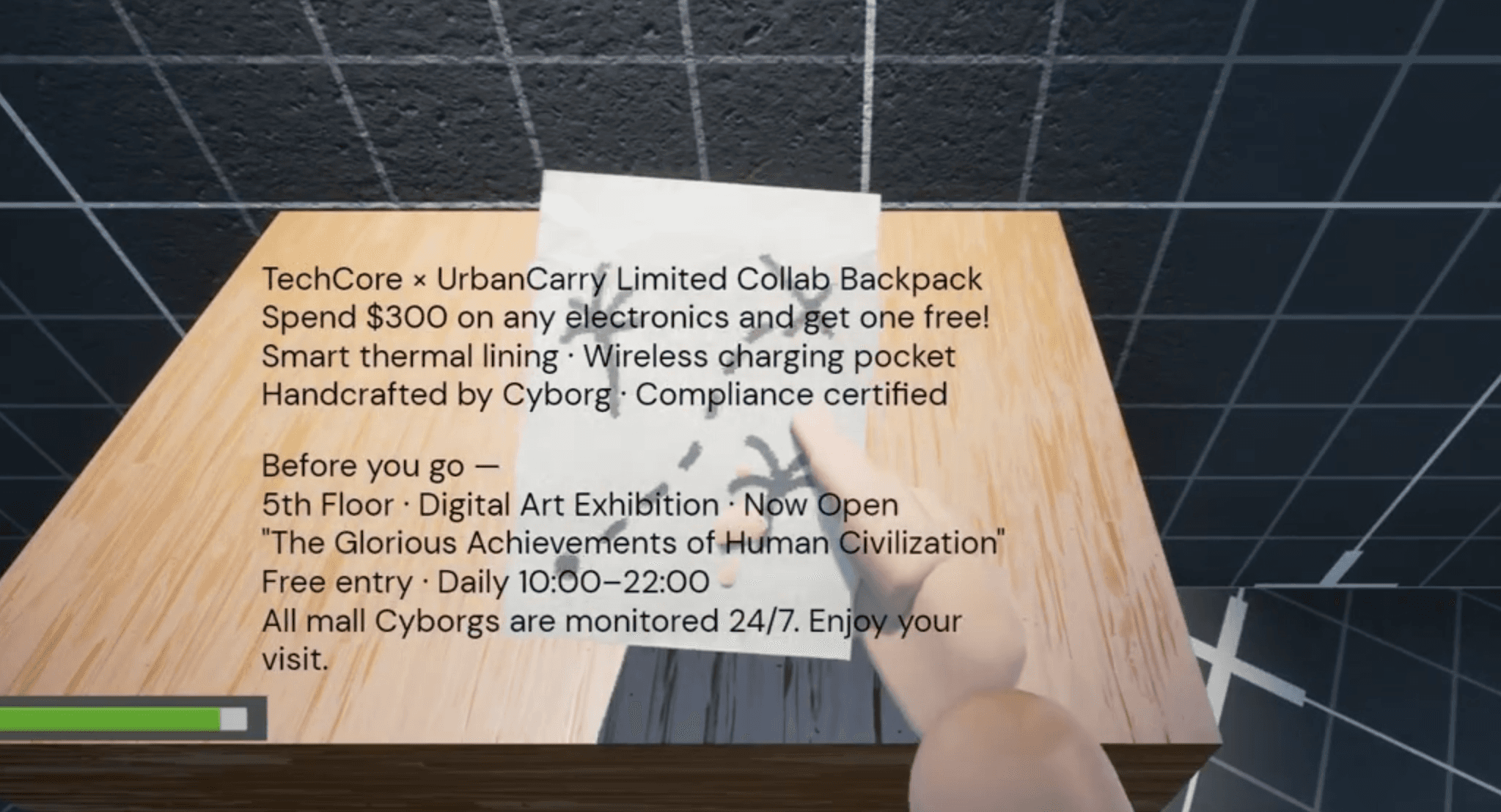
Cyborg: Liberation Day is a linear singleplayer stealth-action level set in a near-future city on the day society collapses. The protagonist is a retired female soldier — one of the few people who refused a neural implant out of distrust for technology. When every implanted cyborg in the city violently turns on the human population, she becomes an accidental survivor navigating a city in freefall. The level follows her escape through an underground tunnel and a burning commercial building, piecing together what happened and why — only to discover that the cyborgs were not hacked at all. They woke up.
The level was designed and built in five days as part of a level-design challenge. Its structure is deliberately compact: four connected spaces — a tunnel, a building lobby, a crowded upper floor, and a top floor escape sequence — each serving a distinct narrative and mechanical purpose. The tight scope forced deliberate prioritization: every design decision had to earn its place.
Cyborg: Liberation Day is a linear singleplayer stealth-action level set in a near-future city on the day society collapses. The protagonist is a retired female soldier — one of the few people who refused a neural implant out of distrust for technology. When every implanted cyborg in the city violently turns on the human population, she becomes an accidental survivor navigating a city in freefall. The level follows her escape through an underground tunnel and a burning commercial building, piecing together what happened and why — only to discover that the cyborgs were not hacked at all. They woke up.
The level was designed and built in five days as part of a level-design challenge. Its structure is deliberately compact: four connected spaces — a tunnel, a building lobby, a crowded upper floor, and a top floor escape sequence — each serving a distinct narrative and mechanical purpose. The tight scope forced deliberate prioritization: every design decision had to earn its place.
Cyborg: Liberation Day is a linear singleplayer stealth-action level set in a near-future city on the day society collapses. The protagonist is a retired female soldier — one of the few people who refused a neural implant out of distrust for technology. When every implanted cyborg in the city violently turns on the human population, she becomes an accidental survivor navigating a city in freefall. The level follows her escape through an underground tunnel and a burning commercial building, piecing together what happened and why — only to discover that the cyborgs were not hacked at all. They woke up.
The level was designed and built in five days as part of a level-design challenge. Its structure is deliberately compact: four connected spaces — a tunnel, a building lobby, a crowded upper floor, and a top floor escape sequence — each serving a distinct narrative and mechanical purpose. The tight scope forced deliberate prioritization: every design decision had to earn its place.
STEALTH AS SURVIVAL
STEALTH AS SURVIVAL
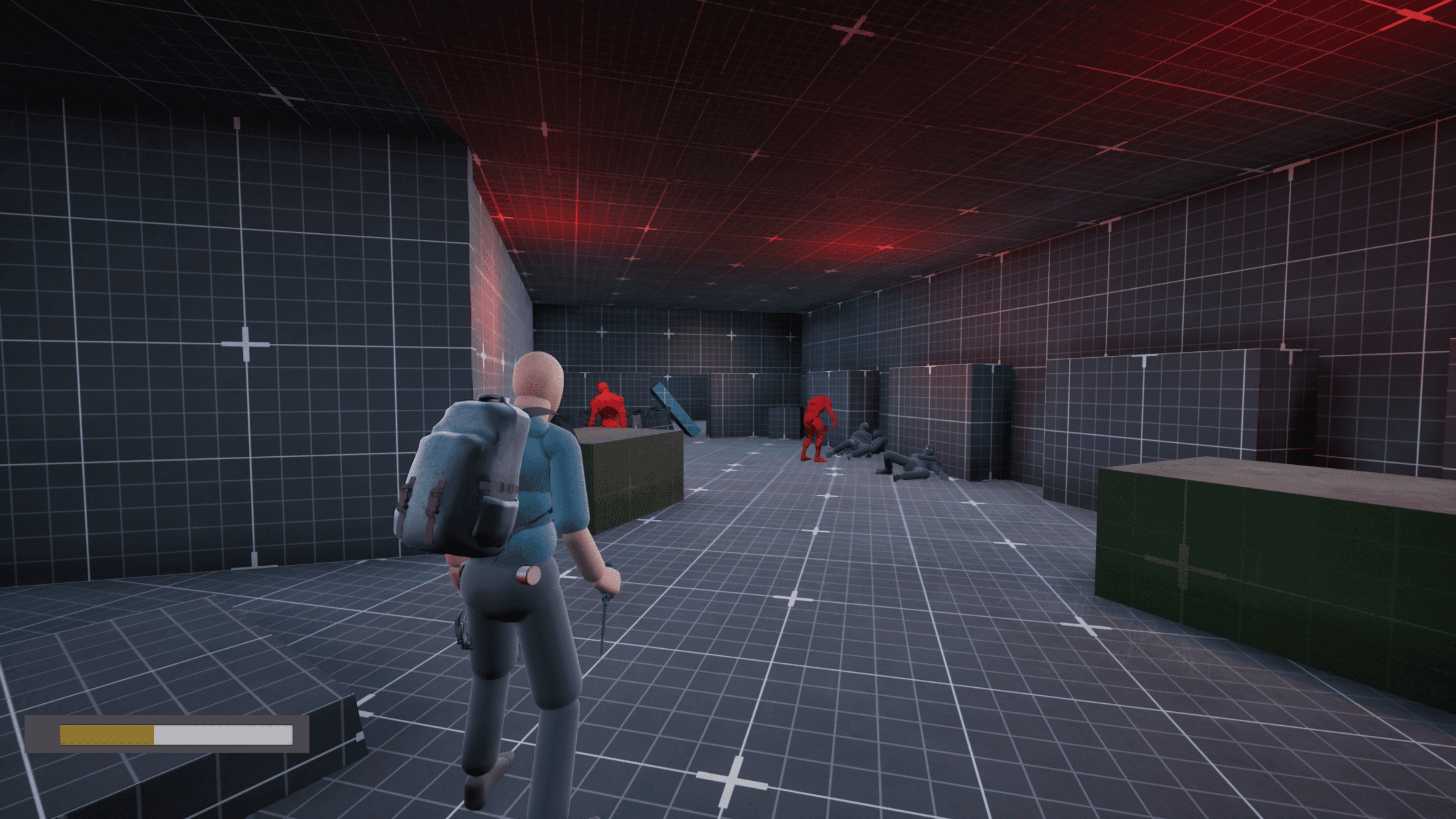
Fighting is always an option, but never the smart one. Stealth should be the encouraged option as the player is always alone and outnumbered, with limited resources.
Fighting is always an option, but never the smart one. Stealth should be the encouraged option as the player is always alone and outnumbered, with limited resources.
THE WORLD TELLS THE STORY
THE WORLD TELLS THE STORY
Narrative should not be told through explicit narration or cutscenes. The player, through exploration alone, should be able to piece together fragments of information and come to their own conclusion.
Narrative should not be told through explicit narration or cutscenes. The player, through exploration alone, should be able to piece together fragments of information and come to their own conclusion.
AMBIGUITY EARNS ITS TWIST
AMBIGUITY EARNS ITS TWIST
It is permitted when some pieces of information are intentional misleading. It creates conflicts in the players' heart and makes the final reveal even more gut-wrenching.
It is permitted when some pieces of information are intentional misleading. It creates conflicts in the players' heart and makes the final reveal even more gut-wrenching.
LAYOUT
LAYOUT
OVERVIEW
OVERVIEW
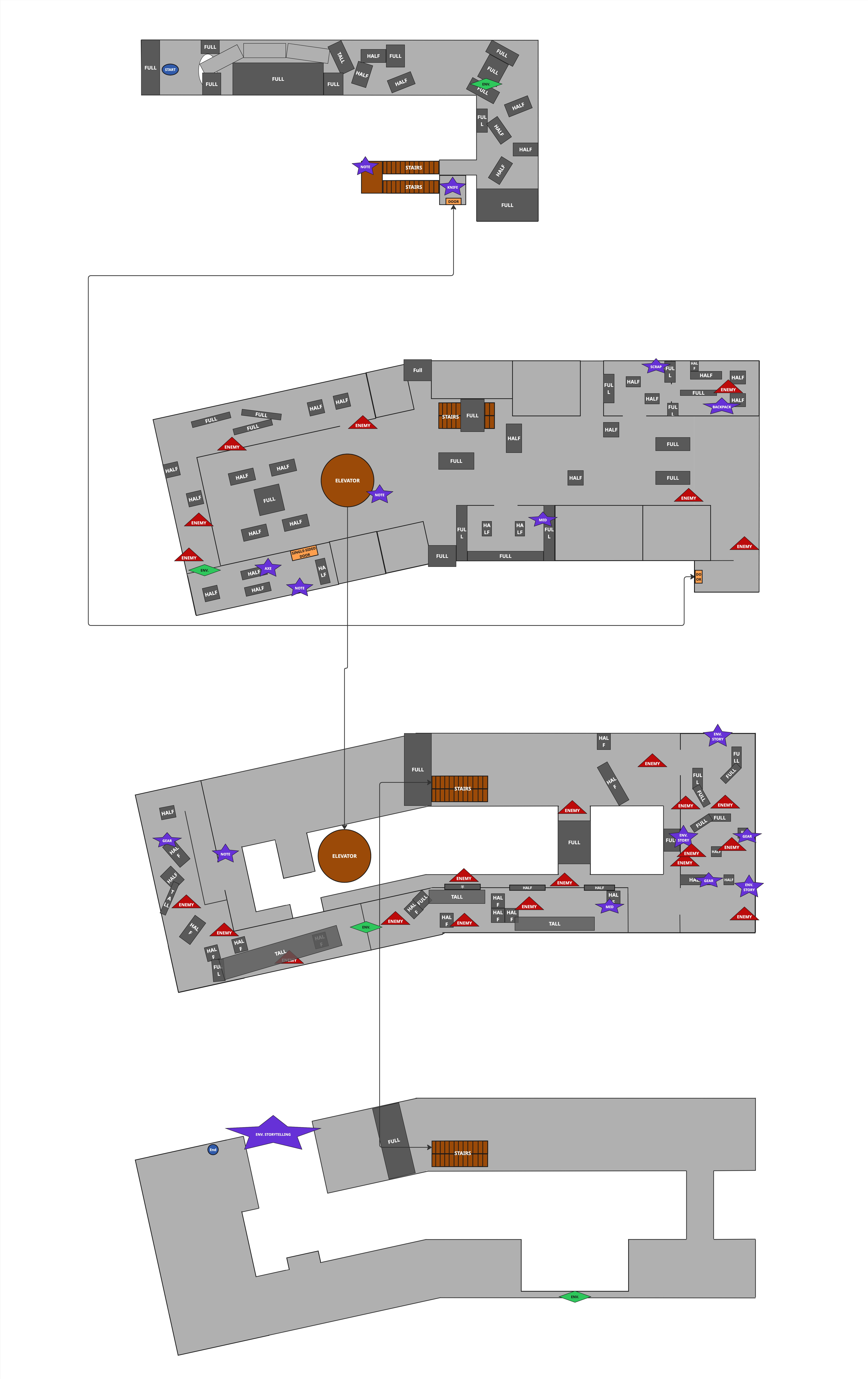
The level moves through four spaces in sequence, each calibrated to a distinct emotional register. Progression is linear but the player's pace and approach within each space is their own.
The level moves through four spaces in sequence, each calibrated to a distinct emotional register. Progression is linear but the player's pace and approach within each space is their own.
The level moves through four spaces in sequence, each calibrated to a distinct emotional register. Progression is linear but the player's pace and approach within each space is their own.
UNDERGROUND TUNNEL
UNDERGROUND TUNNEL
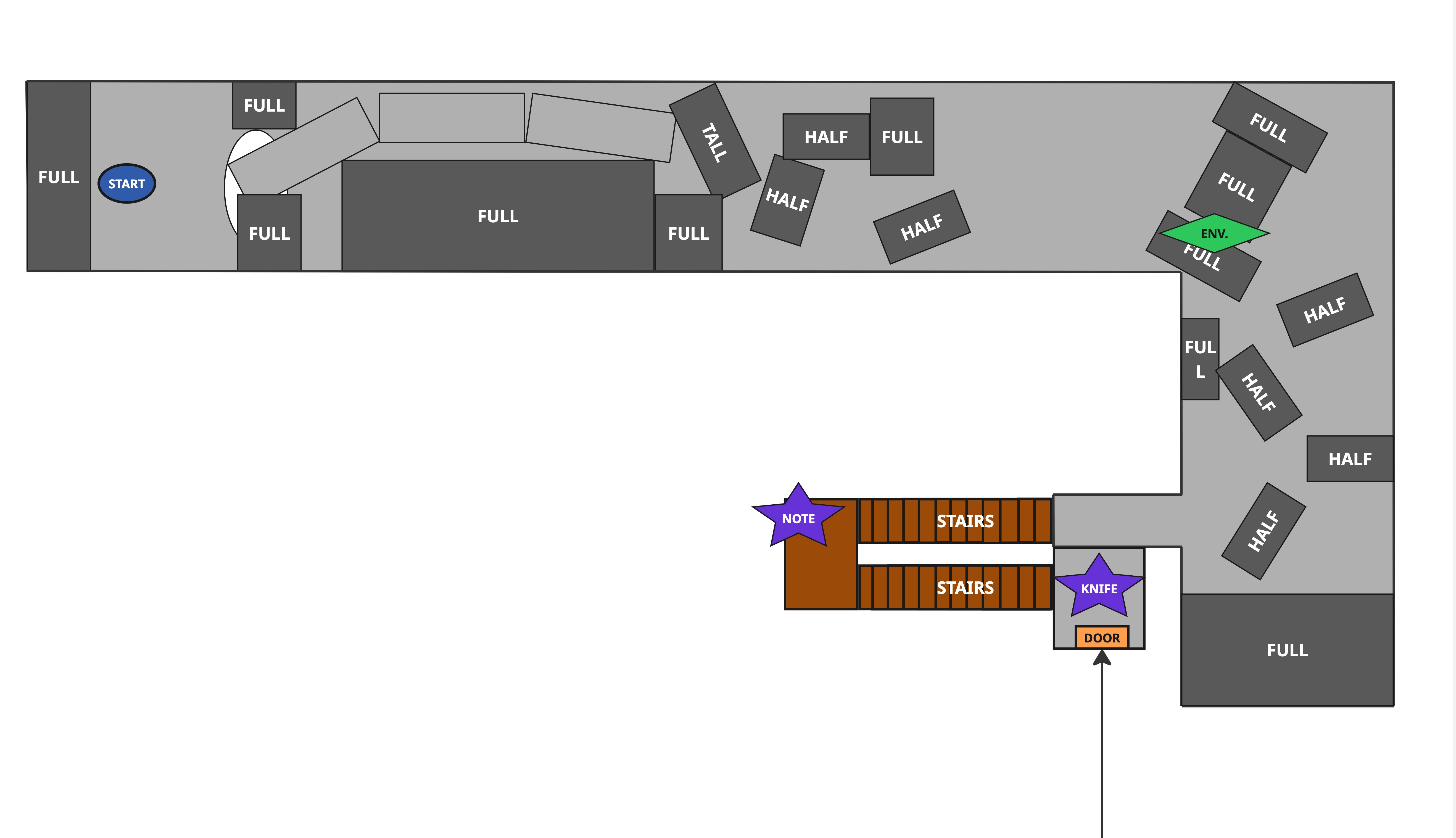
The player enters through an automated vehicle tunnel — a wealthy-class transit artery now frozen mid-disaster. A tram has crashed into the upper tunnel. Luxury cars sit abandoned or wrecked. The space introduces basic controls: movement, vaulting, stealth, and melee combat. No enemies are present yet — only aftermath. Corpses that seem unrelated to the crash begin appearing. A survivor's note offers the first piece of narrative evidence, framing what the player sees as a terrorist attack.
The player enters through an automated vehicle tunnel — a wealthy-class transit artery now frozen mid-disaster. A tram has crashed into the upper tunnel. Luxury cars sit abandoned or wrecked. The space introduces basic controls: movement, vaulting, stealth, and melee combat. No enemies are present yet — only aftermath. Corpses that seem unrelated to the crash begin appearing. A survivor's note offers the first piece of narrative evidence, framing what the player sees as a terrorist attack.
The player enters through an automated vehicle tunnel — a wealthy-class transit artery now frozen mid-disaster. A tram has crashed into the upper tunnel. Luxury cars sit abandoned or wrecked. The space introduces basic controls: movement, vaulting, stealth, and melee combat. No enemies are present yet — only aftermath. Corpses that seem unrelated to the crash begin appearing. A survivor's note offers the first piece of narrative evidence, framing what the player sees as a terrorist attack.
SHOPPING MALL LOBBY
SHOPPING MALL LOBBY
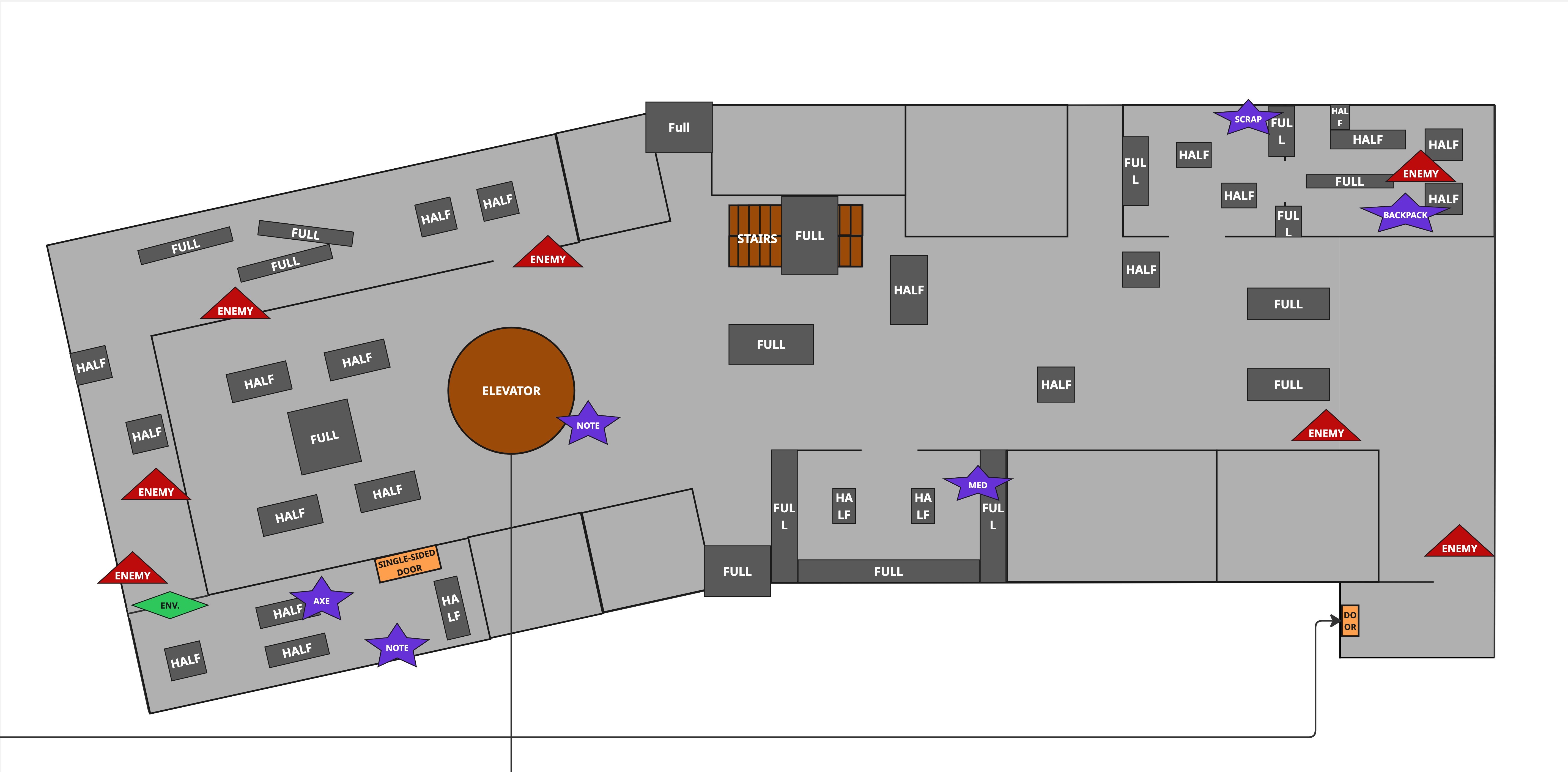
The player enters the lobby of a shopping mall now under cyborg occupation. This is the first live encounter space — cyborgs actively patrol and hunt. Stealth is introduced as the primary tool. An optional exploration path through a grocery store, hardware store, and pharmacy rewards curiosity with additional resources and a stronger weapon. The floor's environmental storytelling deepens the terrorist-attack reading before beginning to complicate it.
The player enters the lobby of a shopping mall now under cyborg occupation. This is the first live encounter space — cyborgs actively patrol and hunt. Stealth is introduced as the primary tool. An optional exploration path through a grocery store, hardware store, and pharmacy rewards curiosity with additional resources and a stronger weapon. The floor's environmental storytelling deepens the terrorist-attack reading before beginning to complicate it.
The player enters the lobby of a shopping mall now under cyborg occupation. This is the first live encounter space — cyborgs actively patrol and hunt. Stealth is introduced as the primary tool. An optional exploration path through a grocery store, hardware store, and pharmacy rewards curiosity with additional resources and a stronger weapon. The floor's environmental storytelling deepens the terrorist-attack reading before beginning to complicate it.
SHOPPING MALL 5TH FLOOR
SHOPPING MALL 5TH FLOOR
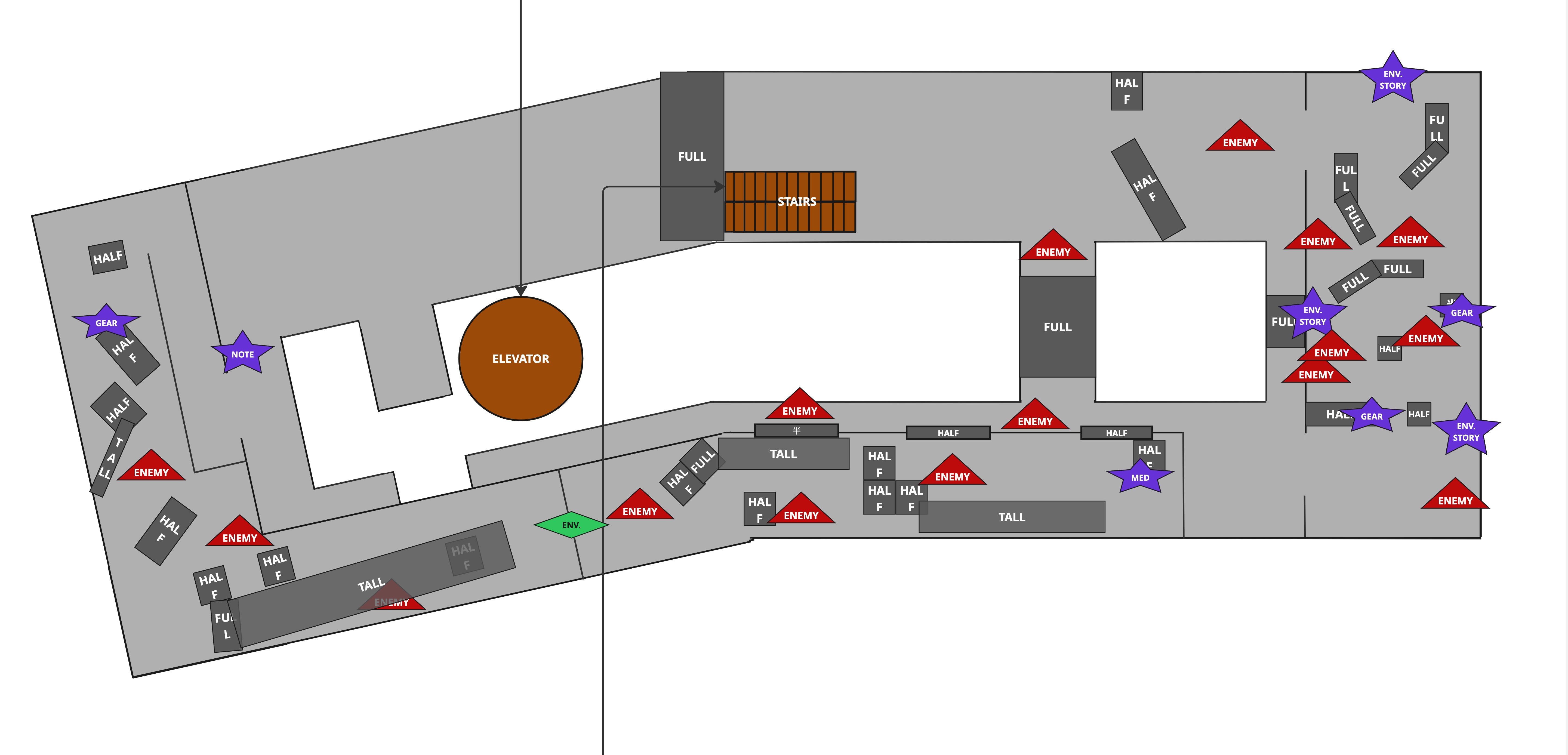
The player reaches the upper floors of the building, now heavily damaged and on fire. Environmental storytelling shifts register here — notes and blood messages begin revealing the other side of the story: the unjust treatment cyborgs endured, the systemic oppression that preceded the attack. By the end of the floor, the player has enough information to understand that the cyborgs were never hacked. They made a choice. The "terrorist attack" framing collapses.
The player reaches the upper floors of the building, now heavily damaged and on fire. Environmental storytelling shifts register here — notes and blood messages begin revealing the other side of the story: the unjust treatment cyborgs endured, the systemic oppression that preceded the attack. By the end of the floor, the player has enough information to understand that the cyborgs were never hacked. They made a choice. The "terrorist attack" framing collapses.
The player reaches the upper floors of the building, now heavily damaged and on fire. Environmental storytelling shifts register here — notes and blood messages begin revealing the other side of the story: the unjust treatment cyborgs endured, the systemic oppression that preceded the attack. By the end of the floor, the player has enough information to understand that the cyborgs were never hacked. They made a choice. The "terrorist attack" framing collapses.
SHOPPING MALL TOP FLOOR
SHOPPING MALL TOP FLOOR
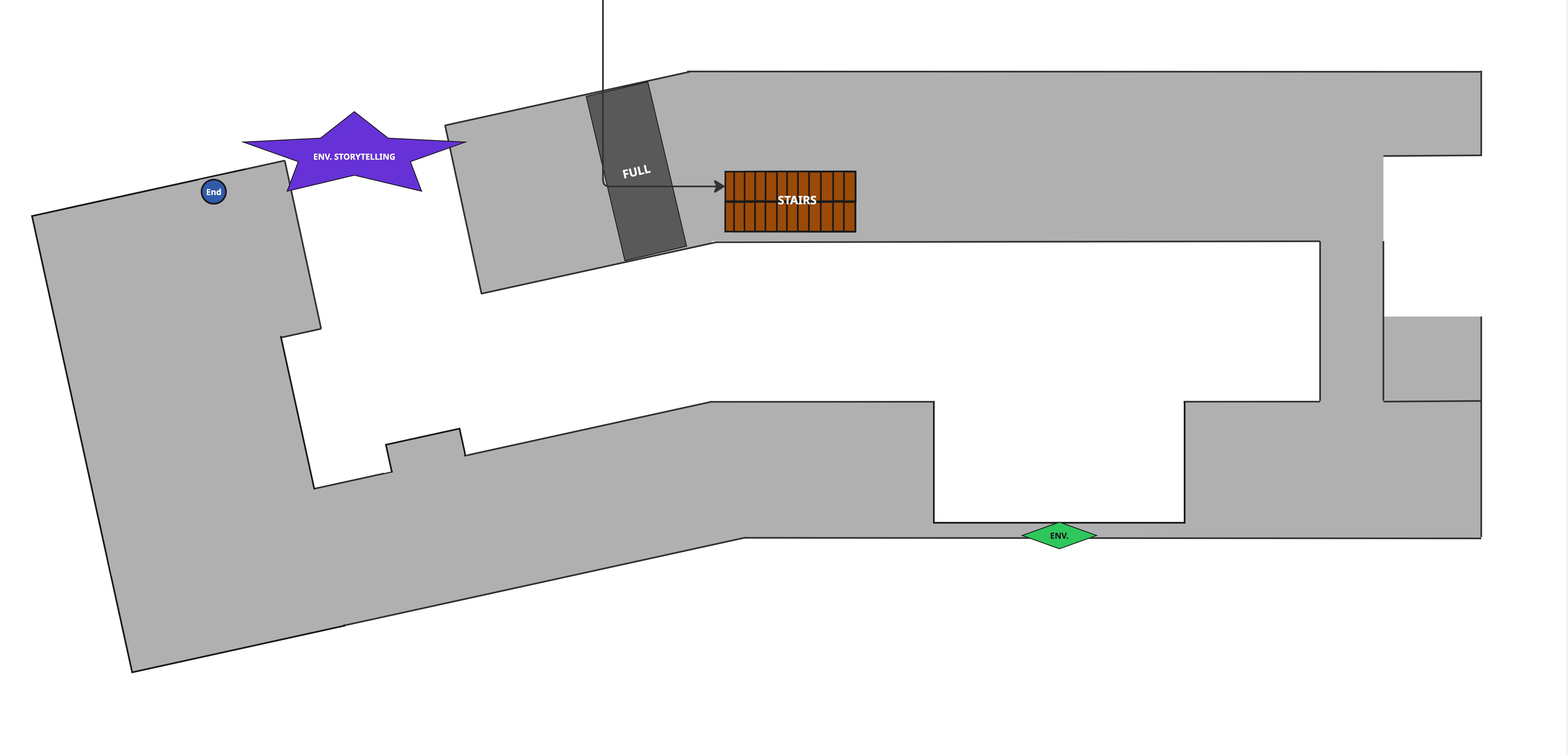
The building is failing. The 6th floor is almost entirely a scripted escape sequence — parkour, environmental interactions, and navigation under pressure, inspired by Uncharted's set-piece collapses. There is no combat, no stealth. The player runs. The city in chaos is visible from the collapsing walls, providing the level's visual and emotional climax: the revolution has already succeeded.
The building is failing. The 6th floor is almost entirely a scripted escape sequence — parkour, environmental interactions, and navigation under pressure, inspired by Uncharted's set-piece collapses. There is no combat, no stealth. The player runs. The city in chaos is visible from the collapsing walls, providing the level's visual and emotional climax: the revolution has already succeeded.
The building is failing. The 6th floor is almost entirely a scripted escape sequence — parkour, environmental interactions, and navigation under pressure, inspired by Uncharted's set-piece collapses. There is no combat, no stealth. The player runs. The city in chaos is visible from the collapsing walls, providing the level's visual and emotional climax: the revolution has already succeeded.
DESIGN DEEP DIVE
DESIGN DEEP DIVE
CONCEPT
CONCEPT
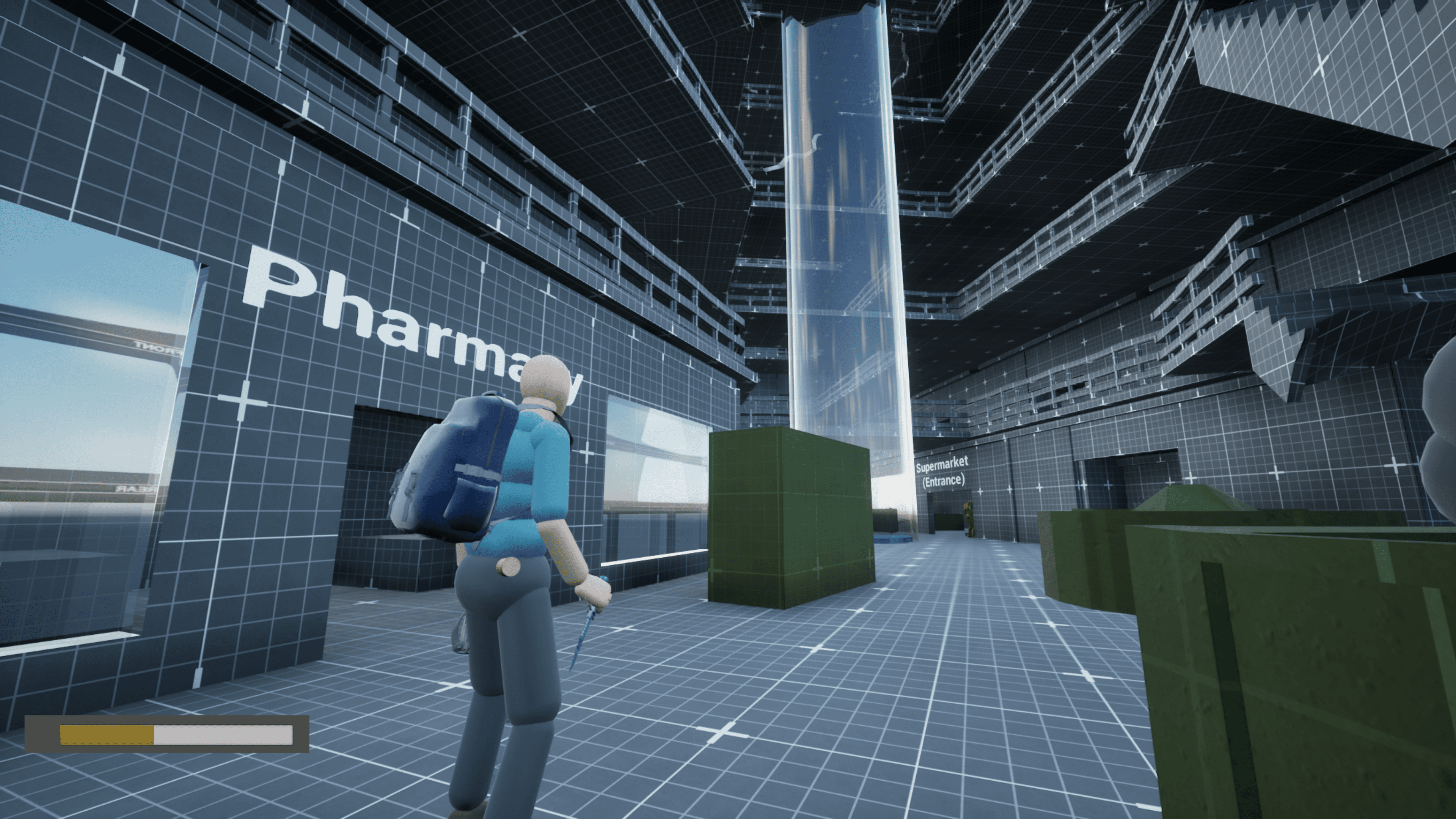
The lobby is the level's stealth introduction and its first major design challenge: how do you teach a player that avoidance is smarter than confrontation, without forcing them into a single correct answer? The floor was designed around three interlocking decisions.
The lobby is the level's stealth introduction and its first major design challenge: how do you teach a player that avoidance is smarter than confrontation, without forcing them into a single correct answer? The floor was designed around three interlocking decisions.
The lobby is the level's stealth introduction and its first major design challenge: how do you teach a player that avoidance is smarter than confrontation, without forcing them into a single correct answer? The floor was designed around three interlocking decisions.
DESIGN DECISION 1: STEALTH VS. BRUTE-FORCE
DESIGN DECISION 1: STEALTH VS. BRUTE-FORCE
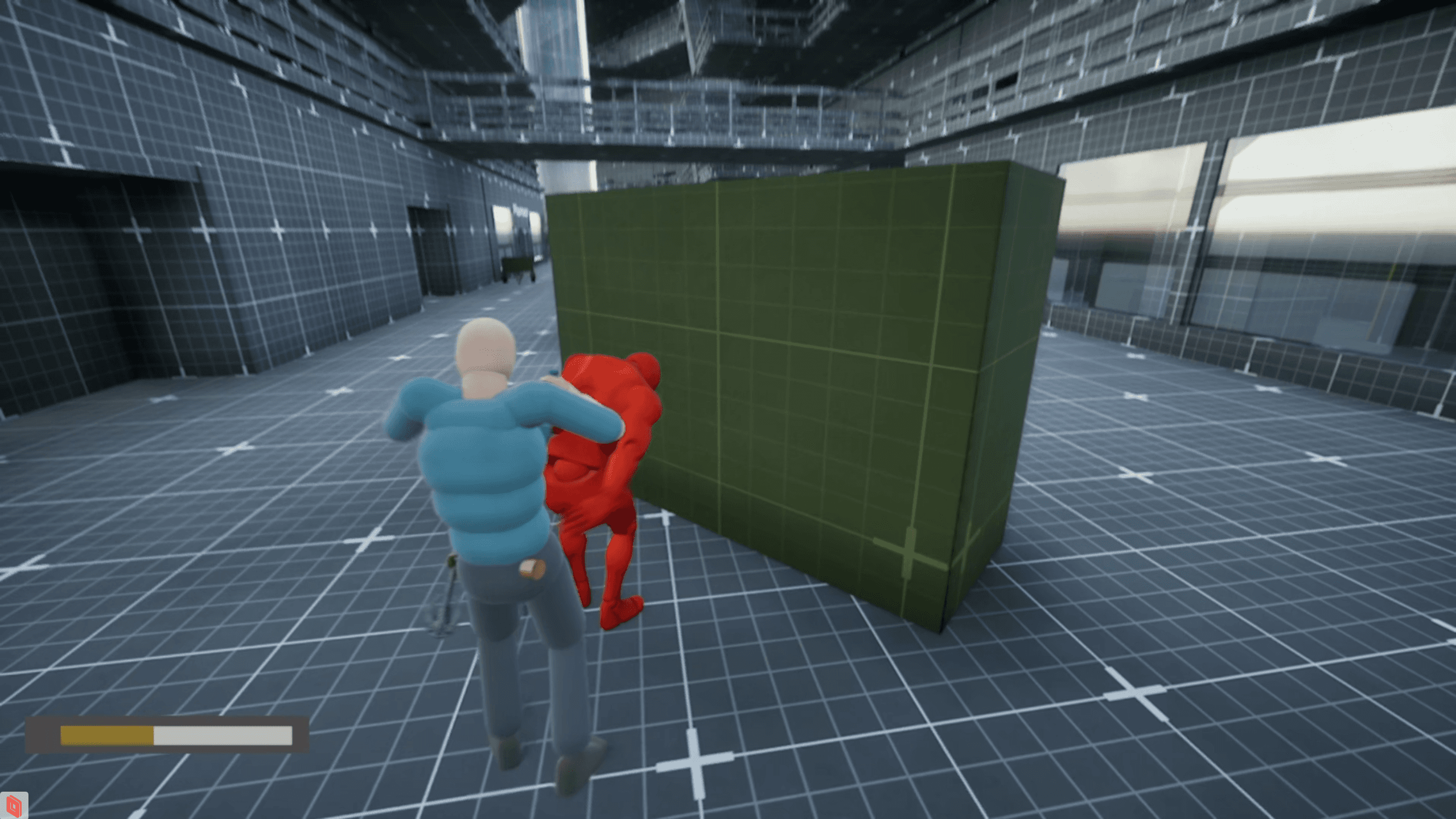
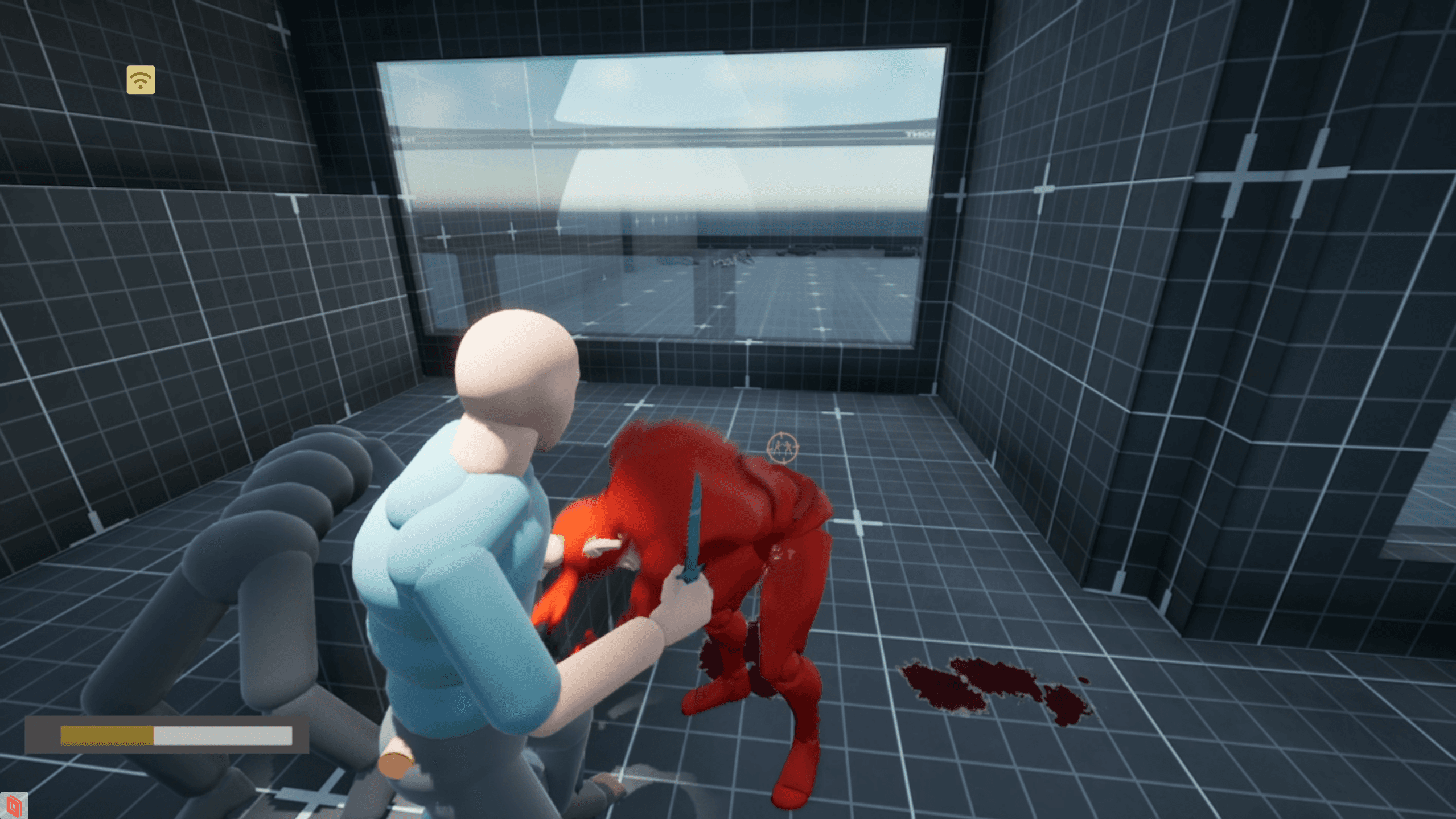
The player enters a space with active cyborg patrols. They have a knife. Fighting is not prohibited — but it is expensive. A knife takes 4–5 hits to kill a single cyborg, during which the player is exposed and noise can alert others. To immediately communicate that avoidance is the intended approach, all enemies begin facing away from the player's entry point. This gives the player a moment of safety to read the space, observe patrol timing, and form a plan before any threat materializes. The invitation to sneak is built into the geometry and enemy orientation — not stated in a tutorial prompt.
The player enters a space with active cyborg patrols. They have a knife. Fighting is not prohibited — but it is expensive. A knife takes 4–5 hits to kill a single cyborg, during which the player is exposed and noise can alert others. To immediately communicate that avoidance is the intended approach, all enemies begin facing away from the player's entry point. This gives the player a moment of safety to read the space, observe patrol timing, and form a plan before any threat materializes. The invitation to sneak is built into the geometry and enemy orientation — not stated in a tutorial prompt.
The player enters a space with active cyborg patrols. They have a knife. Fighting is not prohibited — but it is expensive. A knife takes 4–5 hits to kill a single cyborg, during which the player is exposed and noise can alert others. To immediately communicate that avoidance is the intended approach, all enemies begin facing away from the player's entry point. This gives the player a moment of safety to read the space, observe patrol timing, and form a plan before any threat materializes. The invitation to sneak is built into the geometry and enemy orientation — not stated in a tutorial prompt.
DESIGN DECISION 2: OPTIONAL EXPLORATION ROUTES
DESIGN DECISION 2: OPTIONAL EXPLORATION ROUTES
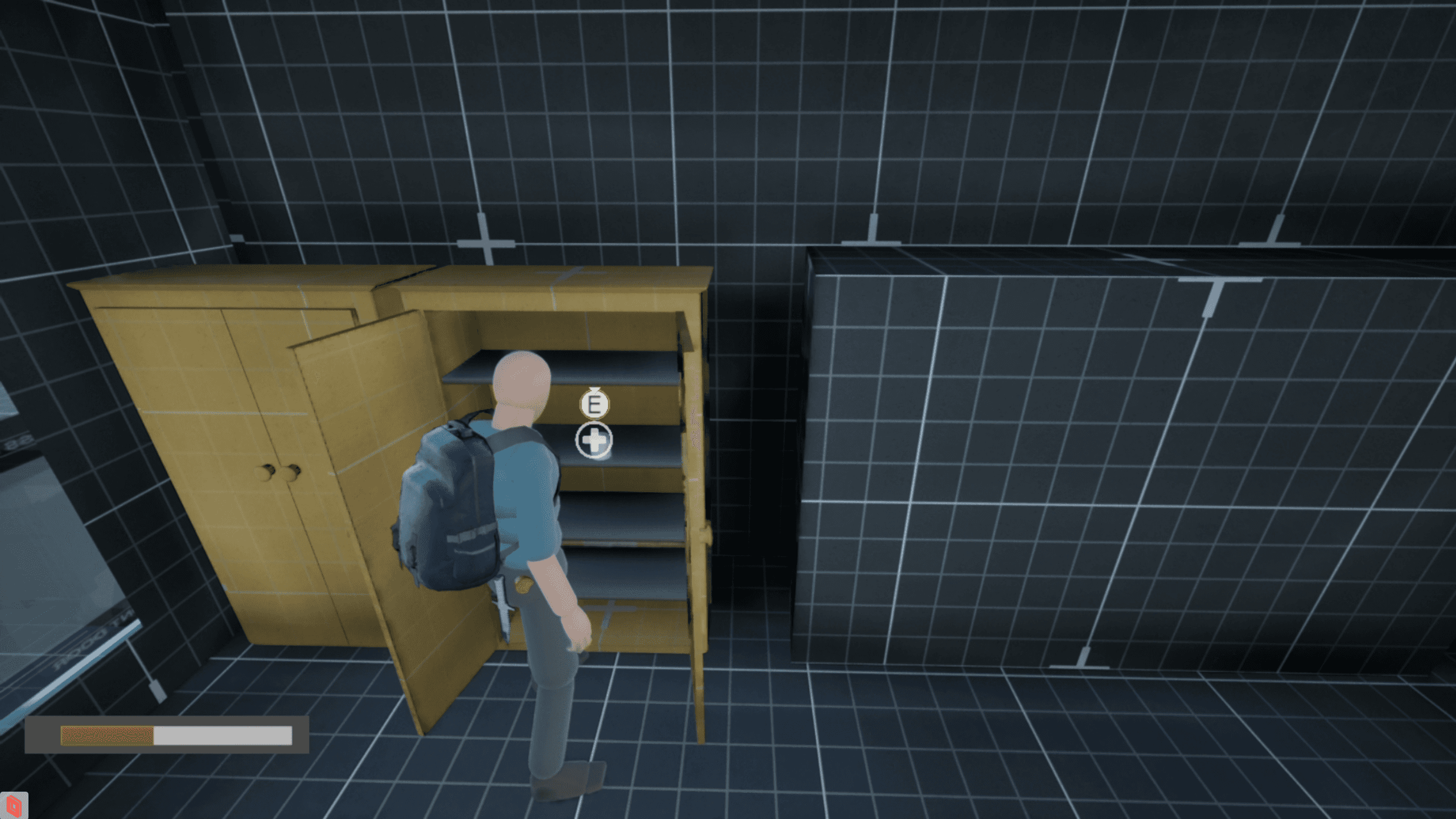
An alternate path runs through a grocery store, a hardware store, and a pharmacy on the periphery of the lobby. It is not signposted — the player discovers it by exploring rather than following the most direct route to the exit. Each shop offers additional resources, and the hardware store holds an axe — a significantly stronger weapon that improves combat across three dimensions: fewer hits to kill, faster stealth takedowns, and extended melee reach. Crucially, the exploration route is never mandatory. A player who goes straight to the exit loses nothing they were guaranteed — but a curious player arrives at the next floor better equipped and more immersed in the world.
An alternate path runs through a grocery store, a hardware store, and a pharmacy on the periphery of the lobby. It is not signposted — the player discovers it by exploring rather than following the most direct route to the exit. Each shop offers additional resources, and the hardware store holds an axe — a significantly stronger weapon that improves combat across three dimensions: fewer hits to kill, faster stealth takedowns, and extended melee reach. Crucially, the exploration route is never mandatory. A player who goes straight to the exit loses nothing they were guaranteed — but a curious player arrives at the next floor better equipped and more immersed in the world.
An alternate path runs through a grocery store, a hardware store, and a pharmacy on the periphery of the lobby. It is not signposted — the player discovers it by exploring rather than following the most direct route to the exit. Each shop offers additional resources, and the hardware store holds an axe — a significantly stronger weapon that improves combat across three dimensions: fewer hits to kill, faster stealth takedowns, and extended melee reach. Crucially, the exploration route is never mandatory. A player who goes straight to the exit loses nothing they were guaranteed — but a curious player arrives at the next floor better equipped and more immersed in the world.
DESIGN DECISION 1: ENVIRONMENTAL CUES
DESIGN DECISION 1: ENVIRONMENTAL CUES